
Why Buy Local Honey? 7 Reasons to Choose Honey from Hawaiʻi.
There is honey.
And then there is honey that tells you where it came from.
A jar of local, raw Hawaiian honey is more than something sweet to drizzle over toast or stir into your morning tea. It is a taste of place. A little sunshine, flowers, rain, and the hard work of thousands of bees, all captured in one golden spoonful.
So, what makes Hawaiian honey different from the generic honey you might find on a supermarket shelf?
The answer starts with the land.
From ʻŌhiʻa Lehua forests and macadamia groves to kiawe and Christmas Berry blossoms, Hawaiʻi's diverse landscapes give local bees access to floral sources that create distinctive flavors and textures. Hawaiian honey can be delicate and floral, rich and nutty, creamy and smooth, or wonderfully complex.

Here are seven reasons to consider choosing local Hawaiian honey the next time you reach for a jar.
1. Local honey tastes like Hawaiʻi
One of the most beautiful things about honey is that bees don't make the flavor alone.
The plants they visit matter.
Honey reflects the nectar sources available around the hive, which means honey from different regions can have remarkably different personalities. In Hawaiʻi, that makes for an especially interesting tasting experience because the islands are home to an incredible variety of tropical, native, and introduced flowering plants.
For example, ʻŌhiʻa Lehua honey can have delicate floral notes, while Macadamia blossom honey can offer a richer, nuttier character. White Kiawe honey is known for its light color and naturally creamy texture.
This is something a generic supermarket honey often can't communicate in the same way: where did the bees gather their nectar, and what was blooming around them?
With a locally produced Hawaiian honey, the answer can be part of the experience.

2. Hawaiian honey has a story you can trace
There is something special about knowing where your food comes from.
A local jar of honey can connect you to an actual beekeeper, apiary, farm, island, or floral source. Instead of simply seeing "honey" on a shelf, you can discover the story behind the harvest.
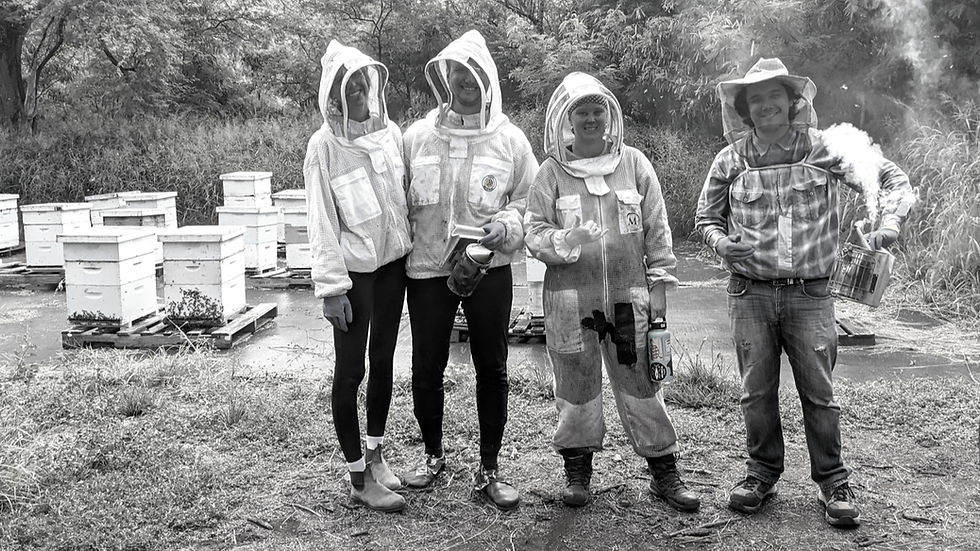
At Mānoa Honey & Mead, for example, Hawaiian raw honeys are associated with specific floral sources and growing regions across the islands, including ʻŌhiʻa Lehua and Macadamia blossom honey from Hawaiʻi Island, and Christmas Berry honey from the North Shores of Oʻahu. You can even experience a working apiary on our Bees to Mead Tour and taste fresh honeycomb harvested during the tour.
That sense of place is part of what makes local food memorable.

3. Local honey gives you more information about where it came from
Not every supermarket honey is the same and that's important to understand.
The word "honey" on a label does not automatically tell you the floral source or the specific place where the bees foraged. In fact, FDA guidance says floral sources such as clover or orange blossom do not have to be declared, although they may be identified when the producer has information supporting the claim.
That makes producer transparency valuable.
When a local beekeeper tells you which island the honey came from, what flowers the bees were visiting, or how the honey was harvested, you're getting context that can make the product much easier to understand, and hopefully in turn, deepen your appreciation for the work put into bringing local honey to retail!
And if you're buying honey, it's worth reading the label.
Raw honey is a single-ingredient food. Products containing honey plus another sweetener must be labeled to distinguish them from honey itself.
In 2025, the FDA also reported testing 102 honey samples from retail stores and U.S. borders for undeclared added sweeteners. The majority complied, but four samples contained undeclared sweeteners, reinforcing the value of paying attention to labeling and choosing producers you trust.

4. Experience the unique range of flavors in Hawaiian honey
If you've only ever tasted one kind of honey, you may be surprised by how much variety exists.
Think of honey like coffee or wine: the source matters.

These aren't simply different labels on the same sweetener. The floral environment can influence honey's color, aroma, flavor, and texture.
That's part of the fun of buying local: you can taste your way through Hawaiʻi.
5. Hawaiian honey can be a delicious way to explore the islands
Sometimes the best souvenirs aren't something that sits on a shelf collecting dust.
They're something you can taste.
A jar of Hawaiian honey makes a wonderful gift because it carries a little piece of the islands home with you. And unlike a generic bottle of honey, a distinctive local variety can become a conversation starter:
"Can you taste the difference between Macadamia and ʻŌhiʻa Lehua honey?"
"Have you ever tasted whipped, Kiawe honey?"
"I went on an apiary tour and harvested mixed-blossom honeycomb! Come taste Pele's Gold!"
Suddenly, breakfast becomes a tiny Hawaiian tasting experience!
Try local honey with:
Warm sourdough or Hawaiian sweet bread
Fresh fruit
Yogurt and granola
Pancakes or waffles
Cheese boards
Tea or coffee
Salad dressings and marinades
Roasted vegetables
Desserts

6. Buying local supports beekeepers and the agricultural community
When you purchase honey directly from a beekeeper or local honey company, your food dollars stay closer to the community that produced the product.
Hawaiʻi's Department of Agriculture maintains an Apiary Program dedicated to protecting the state's beekeeping industry, monitoring honey bee pests, supporting biosecurity, and educating the public. The department notes that honey bees play an important role in pollinating plants that support local agriculture.
And honey is only one part of modern beekeeping. Beekeepers can also provide pollination services, manage swarms, produce beeswax and other hive products, raise queens, and contribute to agricultural systems that depend on pollinators.
So when you choose a local jar, you're supporting more than your appetite for a sweetener. You're supporting the people who care for the hives and the agricultural community that supports your local food system.

7. Buying local keeps you connected to the land, our ʻĀina
Perhaps the best reason to choose Hawaiian honey is also the simplest.
It helps you pay attention.
To the flowers.
To the bees.
To the farmers.
To the seasons.
To the places where food is actually produced.
Hawaiʻi's honey industry exists within a unique island ecosystem, and the state's beekeepers work within that environment year after year. Hawaiʻi's warm climate and diverse flowering plants create opportunities for honey production throughout the year, while the state's geographic isolation makes honey bee biosecurity particularly important.
A local jar gives you a small, tangible connection to all of that.

Local Honey vs. Generic Supermarket Honey
So, should you never buy honey from a supermarket?
Not necessarily.
The supermarket can be convenient, and there are many quality honey products available at retail stores. The bigger question is what you're looking for.
If your priority is simply an everyday sweetener, a supermarket honey may do the job.
But if you want distinctive flavor, a stronger connection to place, greater producer transparency, and a way to support local Hawaiian beekeeping, local honey offers something different.
You're not just buying sweetness.
You're buying a sense of place and supporting the community around you.

How to Choose Hawaiian Honey
When shopping for local honey from Hawaiʻi, look for a few simple things:
Look for the source
Does the label identify Hawaiʻi, a specific island, apiary, floral source, or beekeeper?
Look for the producer
Learn a little about the company or beekeeper behind the jar. Local producers should be able to tell you about their honey and how it is made.
Explore different varieties
Don't stop at one jar. Try ʻŌhiʻa Lehua, macadamia blossom, kiawe, Christmas Berry, or a mixed-blossom honey and see which flavor profile you love. At Manoa Honey & Mead, we also carry a line of specialty honeys, including unique infusions like Rum Barrel-Aged Honey, Cacao Nibs with Honey, Ghost Pepper Honey and Lavender infused honey, as well as a wellness line to boost your well being.
Read the label
If you're looking for pure, raw honey, check the ingredients and product description. FDA guidance requires products containing honey and another sweetener to be identified as a blend rather than simply "honey."
Taste before you decide
Honey is incredibly personal. What one person loves, another may find too floral, too rich, or too mild. We always have free samples at our Honey House for you experience before making your decision.
The Sweetest Part of Buying Local
At the end of the day, choosing Hawaiian honey isn't about saying that every supermarket honey is bad.
It's about choosing something with a little more connection.
A local Hawaiian honey can introduce you to the flowers blooming around an island, the people caring for the hives, and the remarkable relationship between bees, plants, and people.
And perhaps that's what makes it taste so good.
The next time you're standing in front of a shelf of honey, look beyond the golden color.
Look for the place.
Look for the beekeeper.
Look for the story.
Then bring a little Hawaiʻi home, one spoonful at a time.

Frequently Asked Questions About Hawaiian Honey
Is Hawaiian honey different from regular honey?
Hawaiian honey can have distinctive flavors and textures because honey reflects the floral sources available to bees. Hawaiʻi's diverse plant life gives local honey producers access to a variety of nectar sources, including ʻŌhiʻa Lehua, Macadamia, Kiawe, and Christmas Berry.
What is the best Hawaiian honey?
There isn't one honey that is best for everyone. Different Hawaiian honey varieties have different flavor profiles. ʻŌhiʻa Lehua tends to be delicate and floral, while Macadamia blossom honey can be richer and nuttier. The best choice depends on the flavor you enjoy and how you plan to use it!
How do you know the type of honey produced?
Honey is produced by honey bees foraging on flowers and plants. We place our apiaries close to clusters of specific flowers and plants, for example, near Christmas Berry plants or in a grove of Macadamia Nut trees. Honey bees will always prefer to harvest nectar closer to their hive, typically traveling only half a mile to a mile away if necessary. Once we place the apiary in close proximity to flowering trees or plants, it is a natural instinct for the honey bees to collect their pollen from those nearby sources. For the most specific local experience, look for honey that identifies its Hawaiian island, floral source, beekeeper, or producer.
Why should I buy local honey?
Buying local honey can help support your local beekeepers and the local agricultural community while giving you an opportunity to experience honey connected to the region's unique floral environment.
Hawaiʻi's Department of Agriculture recognizes the importance of beekeeping and honey bees to local agriculture and maintains an Apiary Program to support the industry. When looking for local honey in Hawai'i, look at farmers' markets, local food retailers, farm shops, and directly from Hawaiʻi honey producers. Many Hawaiian honey companies also ship their products to customers outside the islands. Mānoa Honey & Mead, for example, sells a range of Hawaiian raw honeys online and at retail locations across O'ahu in Wahiawa and Kaimuki.
When you choose local Hawaiian honey, you're choosing more than a sweetener. You're choosing flavor, place, craftsmanship, and a closer connection to the people and land behind your food.


Just used the browser's OCR tool to extract text from this PNG screenshot-super handy! Local Hawaiian honey like Macadamia really tells the island's story, way more interesting than generic supermarket stuff. extract text from png
My students kept asking for something unbeatable, so I printed the impossible maze. Two of them cracked it at lunch and I've never been prouder or more annoyed.
Some roads are easier to recognize on a map than from a list of street names. Driving Directions gives you a visual overview of your planned drive, helping you become familiar with the route before getting behind the wheel.
I like learning about the different flavors of Hawaiian honey and how local flowers influence their taste. While I enjoy playing Basket Random for a bit of fun, I also appreciate discovering local products that support small businesses and the environment.
Very informative post, and I liked how naturally the information was presented. I sometimes play gd when I want a quick game during a break. The controls are easy to understand, while the different levels still give you something to work on. Learning the patterns and getting past difficult obstacles makes each attempt feel a little different.